The Geometric Foundation
Pelli based the towers' floor plan on Islamic geometric patterns, specifically two interlocking squares rotated to create an eight-pointed star. This configuration extended through all 88 floors, generating the towers' distinctive profile when viewed from above or in plan drawings.
The geometric system served functional purposes beyond cultural symbolism. The star pattern created natural corner conditions ideal for office layouts, maximizing perimeter exposure for interior spaces. Each floor provided more corner offices than conventional rectangular plans would allow.
This design decision indirectly shaped the observation deck experience. The non-rectangular floor plan produces varied viewing angles as visitors move around the 86th floor perimeter, with the star geometry creating alcoves and projections rather than uniform circumference.
Vertical Articulation
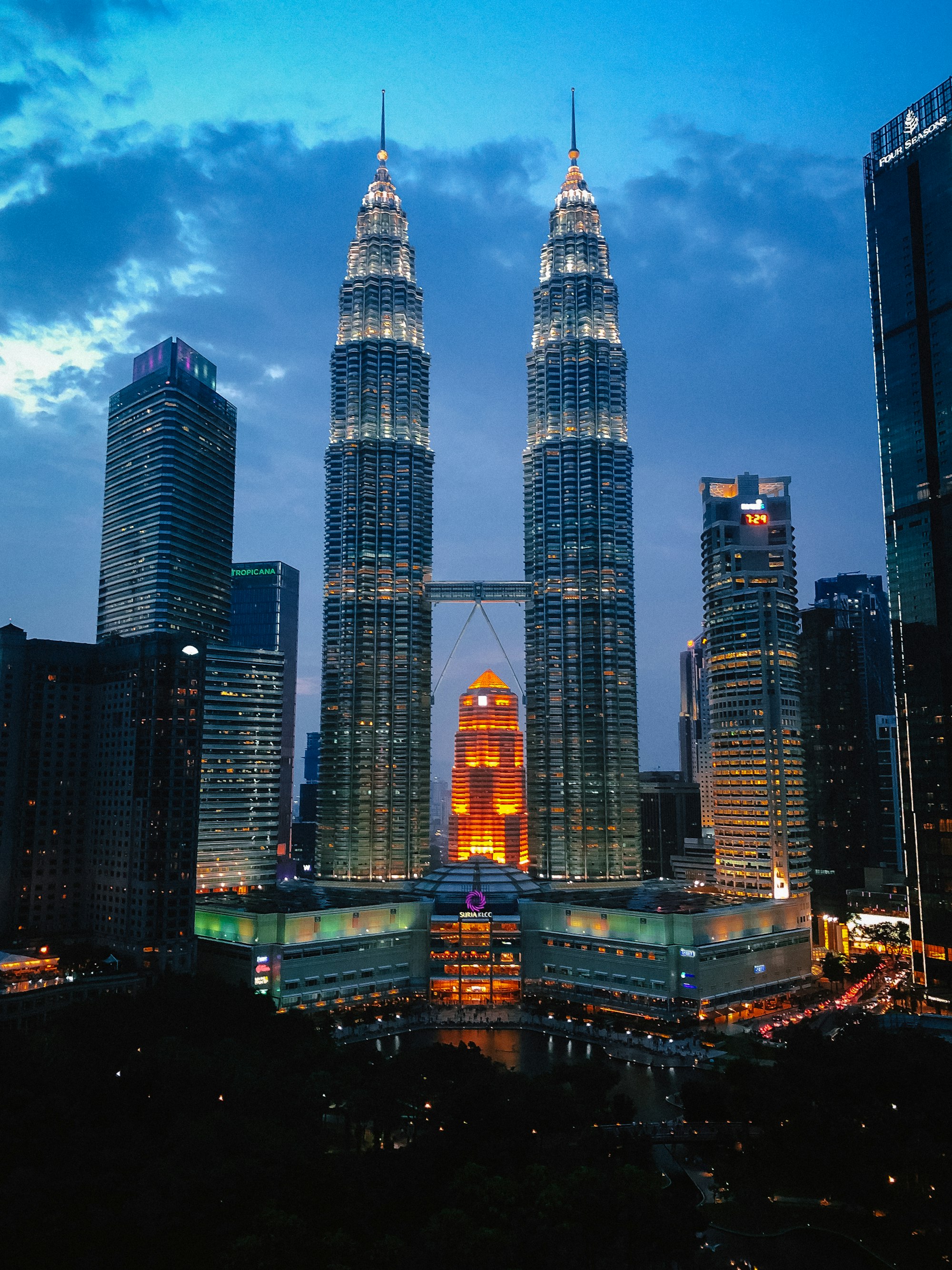
The towers rise in stepped setbacks that reduce their footprint as height increases. Pelli designed these setbacks to occur at specific intervals, creating visual rhythm when viewing the towers from ground level. The progression also responded to structural requirements—reducing mass at higher elevations decreased wind loads and seismic forces.
The skybridge connection at the 41st floor sits at one of these setback points. Its position reflects both structural opportunity—where both towers maintain sufficient width—and proportional aesthetics. The bridge location divides the towers' height into roughly thirds, creating balance when viewed from distance.
Pelli's office calculated that visitors accessing the towers would experience these proportions differently from ground observers. Those ascending through the Petronas Twin Towers perceive the setbacks from within, as changing floor plates and shifting geometries, rather than as external sculptural elements.
Material Expression
The towers' exterior cladding combines stainless steel and glass in proportions that balance reflectivity with transparency. Pelli selected materials that would respond to Kuala Lumpur's intense tropical sunlight without creating excessive glare or heat gain.
The stainless steel panels feature a specific finish that scatters light rather than producing mirror reflections. This treatment allows the towers to appear luminous in varied lighting conditions—the quality visible in photography of the Petronas Twin Towers from ground level.